About Milos
White island .
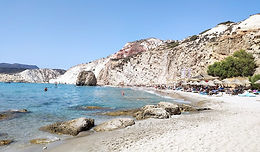


Milos – The Island of Aphrodite and Colors
Milos, the southwesternmost island of the Cyclades, is famous for its volcanic landscapes, multicolored beaches, and rich archaeological heritage. It is the birthplace of the renowned Venus de Milo, the statue of Aphrodite now displayed at the Louvre in Paris.
Geography and Landscape
Milos covers about 160 sq. km and is shaped like a horseshoe, forming one of the largest natural bays in the Mediterranean at its center. Its volcanic soil has sculpted spectacular scenery — from vividly colored cliffs and hot springs to beaches of extraordinary form and texture.
History and Culture
The island has been inhabited since the Neolithic era. In antiquity, Milos was famed for its obsidian, a volcanic glass used to make tools and weapons throughout the Aegean.
During the Classical period, Milos allied with Sparta, a choice that led to its tragic confrontation with Athens during the Peloponnesian War — immortalized by Thucydides in his “Melian Dialogue.”
Notable archaeological sites include:
-
The Ancient Theatre of Milos.
-
The Catacombs, among the most important early Christian monuments (1st century AD).
-
The site of the Venus de Milo’s discovery.
Beaches
With over 70 beaches, each offering its own unique charm, Milos is a paradise for sea lovers:
-
Sarakiniko – The island’s most iconic spot, with white volcanic rocks resembling a lunar landscape.
-
Kleftiko – Accessible only by boat, with sea caves, turquoise waters, and a history of pirate hideouts.
-
Fyropotamos – A picturesque fishing village with a sandy beach.
-
Paliochori – Known for its warm waters and multicolored cliffs.
-
Tsigrado – Stunning and secluded, accessible via a narrow descent.
-
Plathiena, Chivadolimni, Agia Kyriaki – Quiet, authentic, and ideal for relaxation.
Villages and Settlements
-
Adamas (Adamantas): The island’s port, lively and full of hotels, restaurants, and shops.
-
Plaka: The capital, with traditional Cycladic architecture, cobblestone streets, and breathtaking sunset views.
-
Klima: A coastal gem known for its syrmata — colorful boathouses carved into the rock by fishermen.
-
Pollonia: A serene seaside village perfect for tranquil holidays and excellent dining.
Gastronomy
Milos’ cuisine is a delicious reflection of its land and sea:
-
Pitarakia – Small cheese pies made with local cheese.
-
Kopanakia – Handmade pasta served with myzithra cheese.
-
Xynomyzithra – A tangy local cheese.
-
Mantolato and Koufeto – Traditional sweets with almonds and honey.
-
Fresh seafood, especially in seaside tavernas.
Activities
-
Boat excursions around the island, exploring hidden caves and beaches accessible only by sea.
-
Diving and snorkeling in crystal-clear waters.
-
Hiking scenic trails overlooking the Aegean.
-
Museum visits, such as the Archaeological Museum of Milos and the Mining Museum.
An Island of Unique Identity
Milos is the island of colors and contrasts — white rocks, blue waters, red sunsets, and houses painted in vivid hues. It is a place where history, tradition, and nature meet harmoniously, offering an experience that is both timeless and profoundly beautiful.
A land sculpted by fire and sea — and blessed by Aphrodite herself.


